
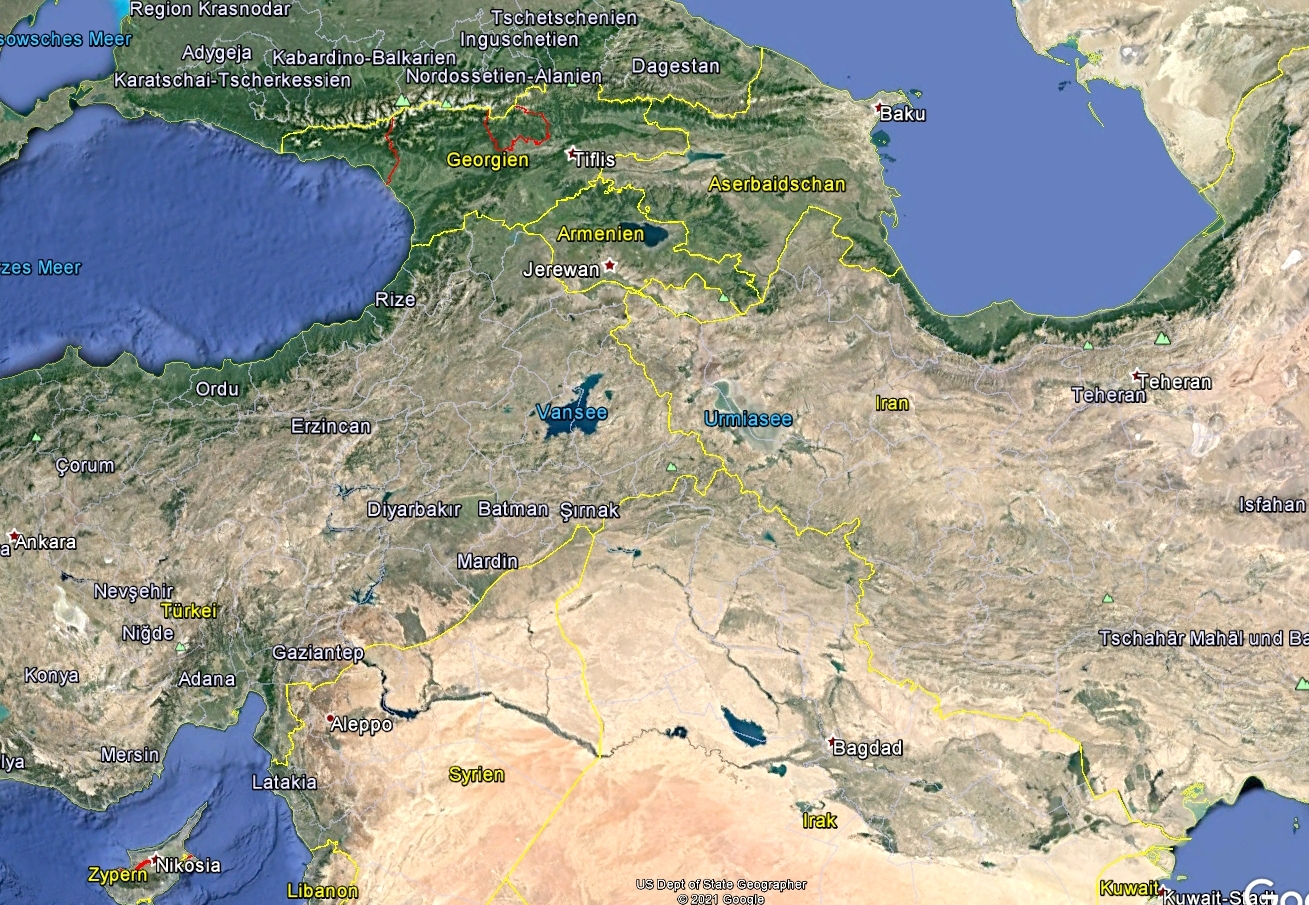
Wer essentially have (north) Iran, Aserbaijan, Georgia, Armenia and Turkey.
 |
Large Pictures |
| ||||||
|
First a large-scale map showing the modern borders of the countries in the general
region.- Wer essentially have (north) Iran, Aserbaijan, Georgia, Armenia and Turkey. |
|||||
| ||||||
|
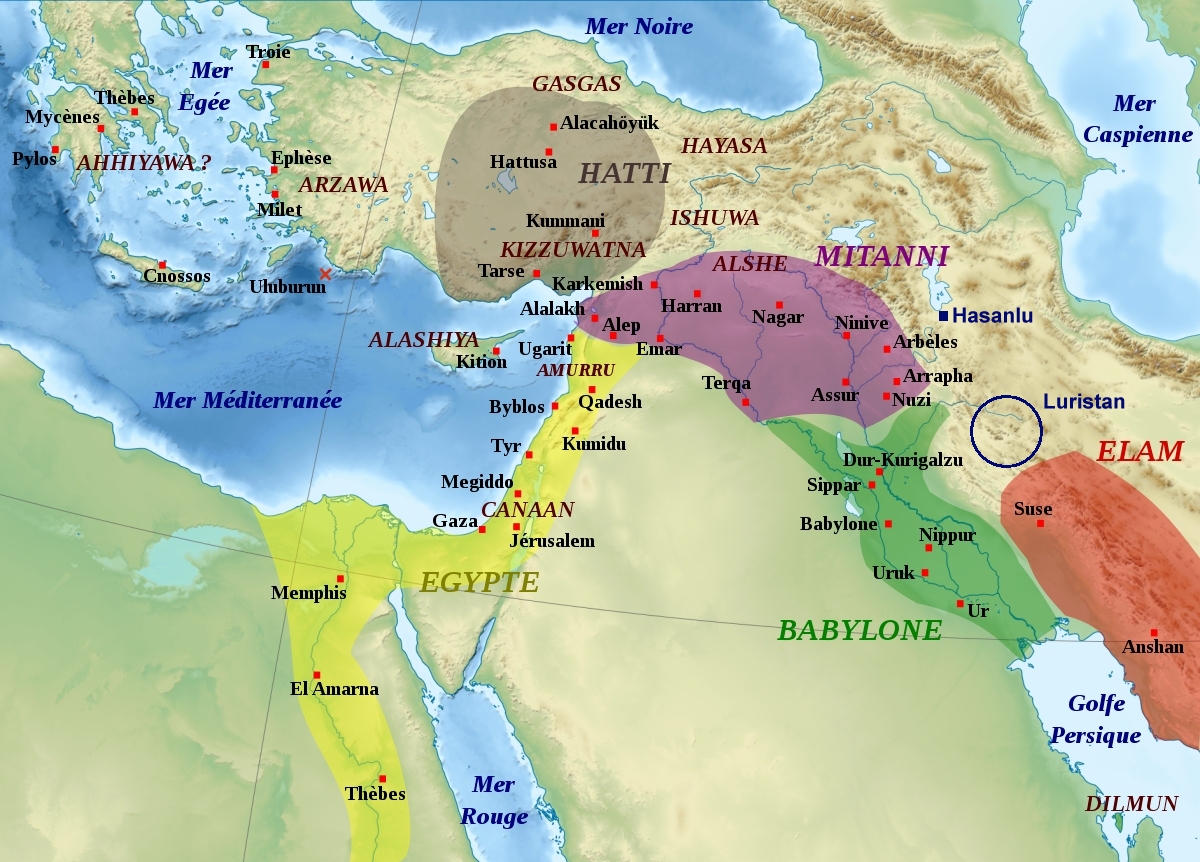
Another map covering a lot of territory showing the important powers around 1300 BC | |||||||||||||
| ||||||||||||||
|
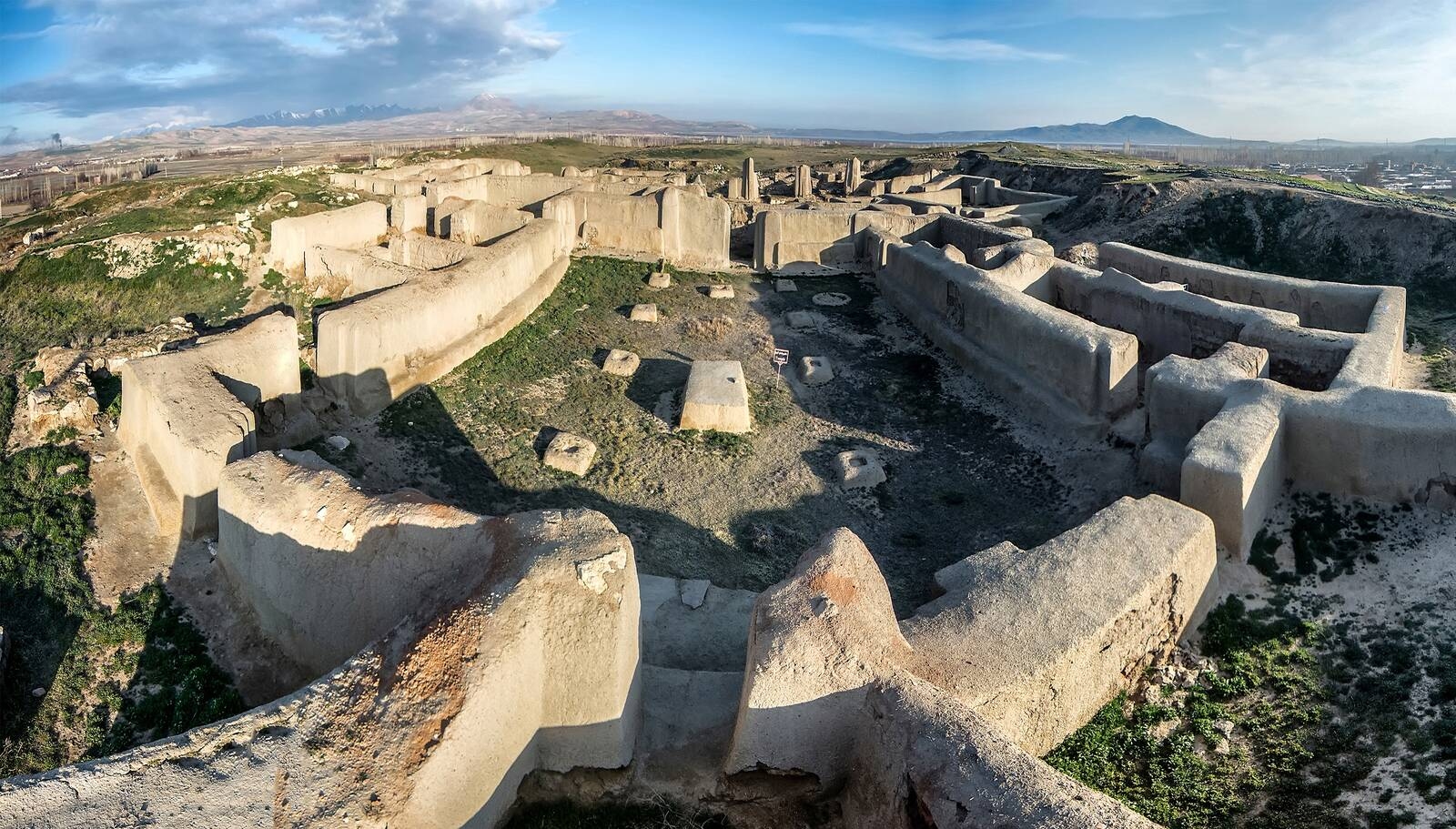
A picture of Hassanlu as seen today. | |||||||||||||
| ||||||||||||||
|
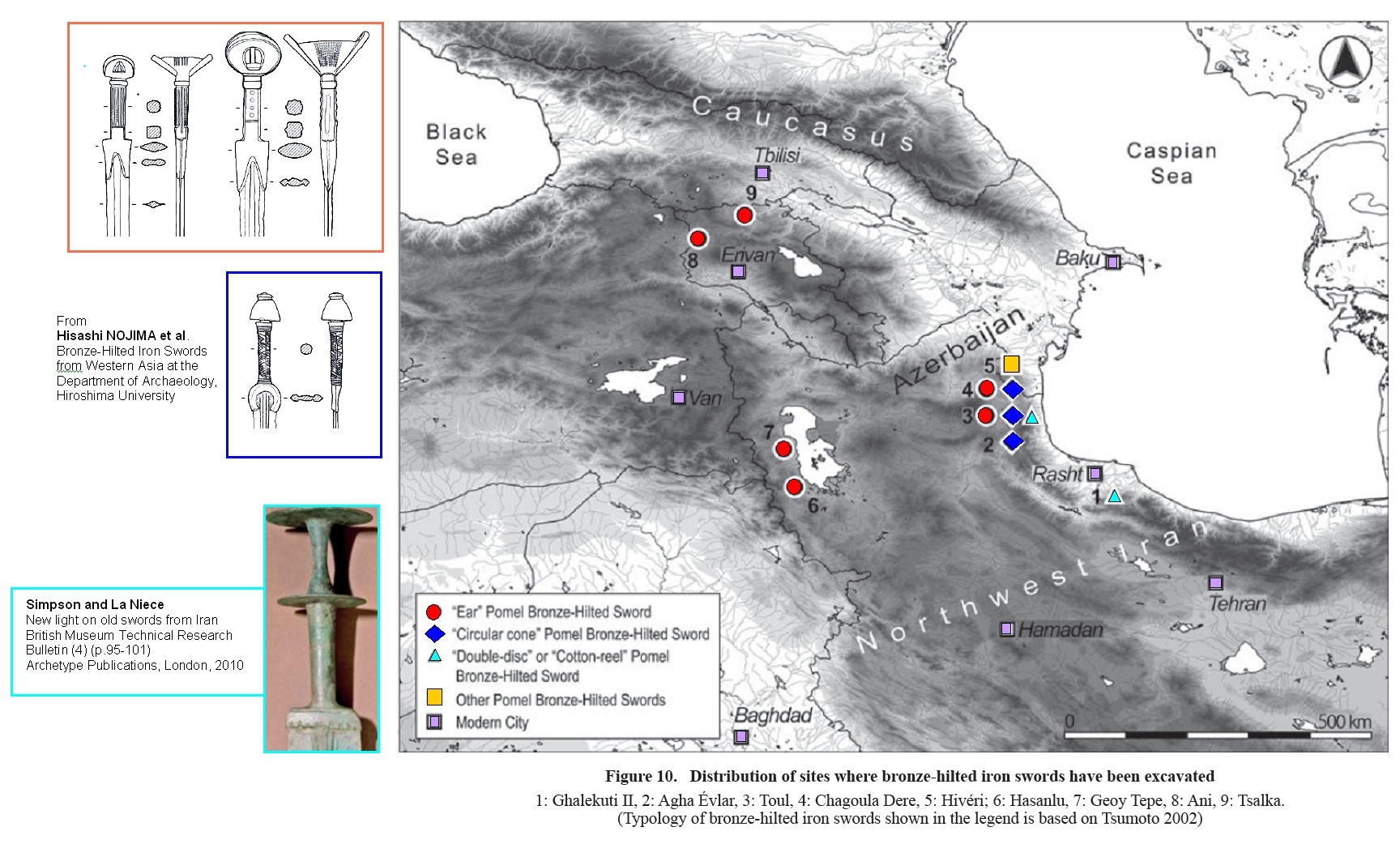
The following map shows where bi-metal swords have been found in scientific
excavations. The map and the two pictures on top are from the papers cited. The added color and composition was my work. The authors actually did not use the term "circular cone bronze pommel" in their paper nor did they ever refer to "double disc" pommels in the text. That's why I included a picture from a different paper. The reference given in the picture captions would probably be of interest but is only available in Japanese, it seems. |
||||||||||||
| |||||||||||||
|
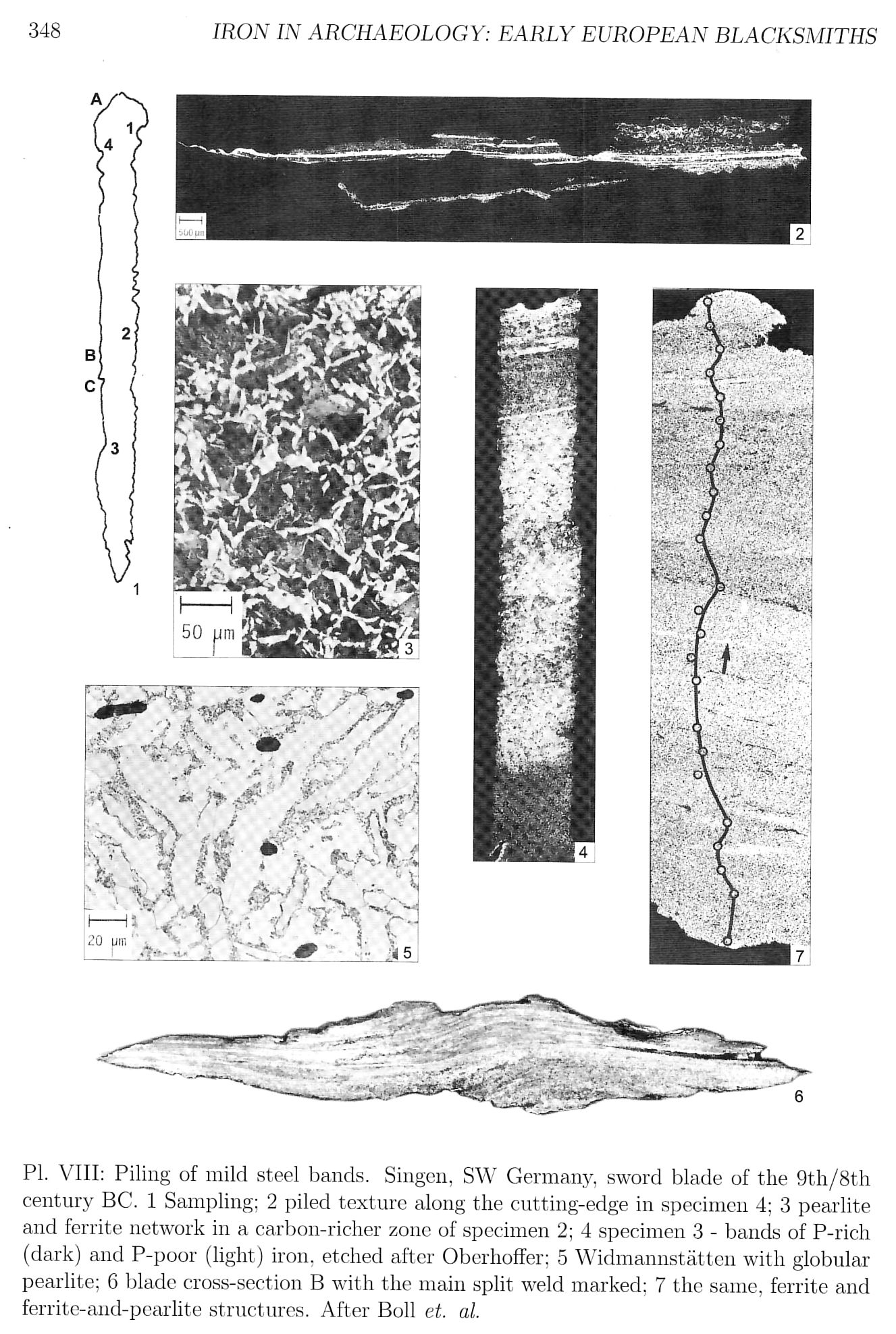
The picture below shows the relvant page of Pleiner's book with details of the "Singen" sword | ||||||||||||
| |||||||||||||
|
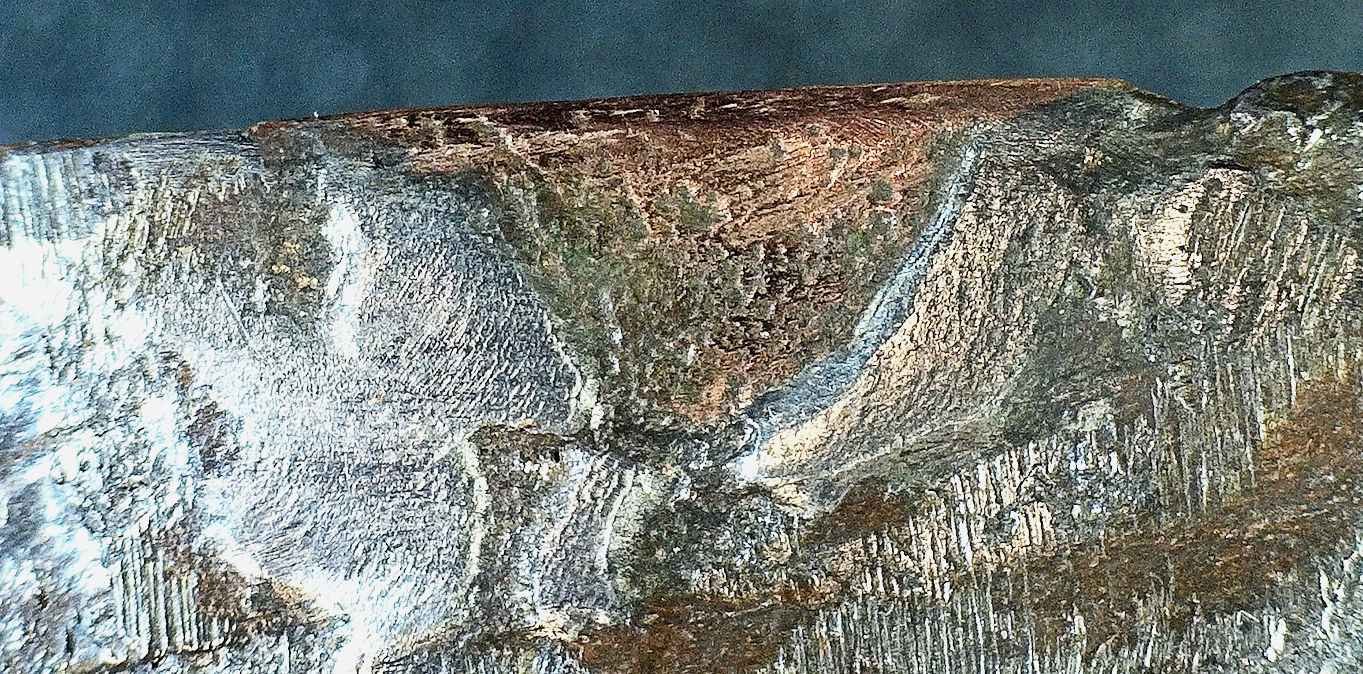
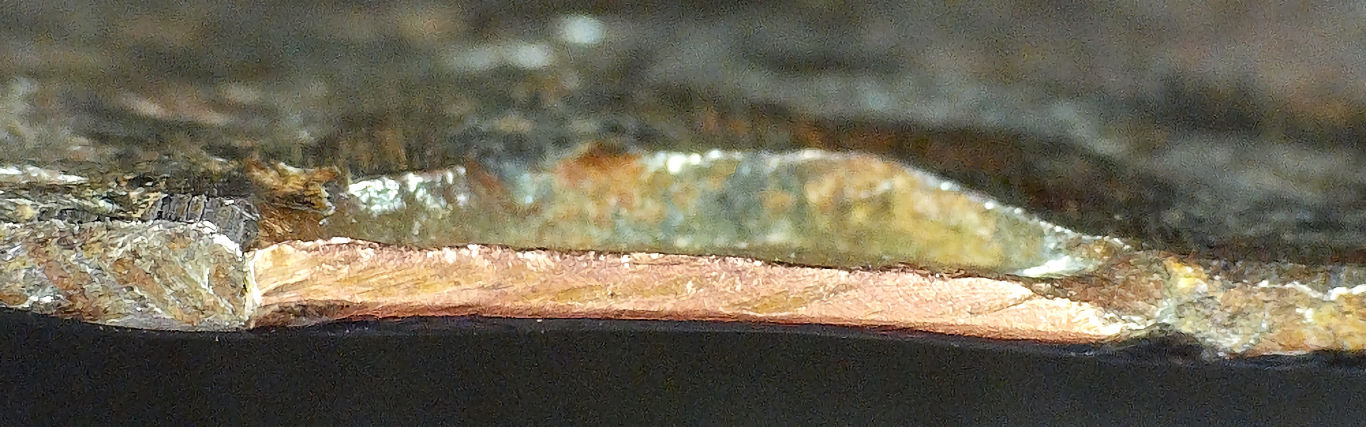
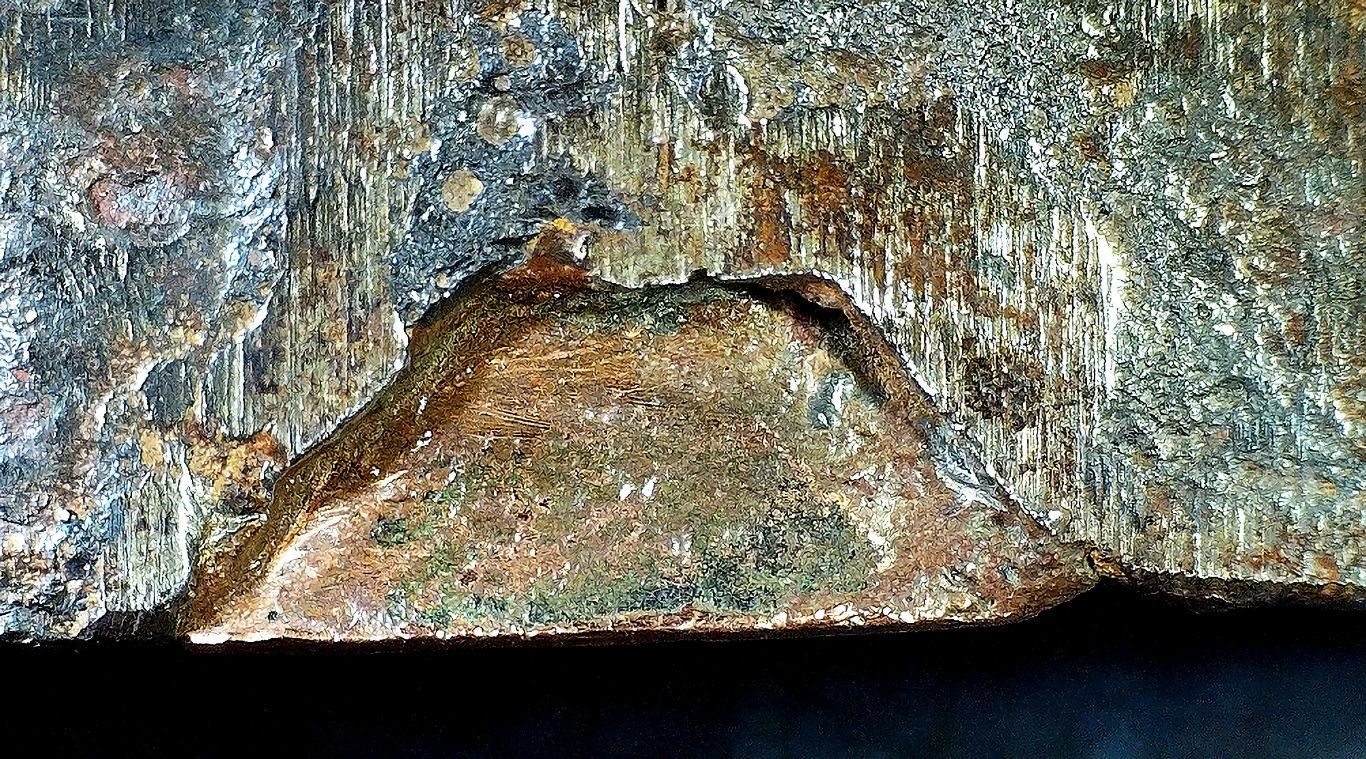
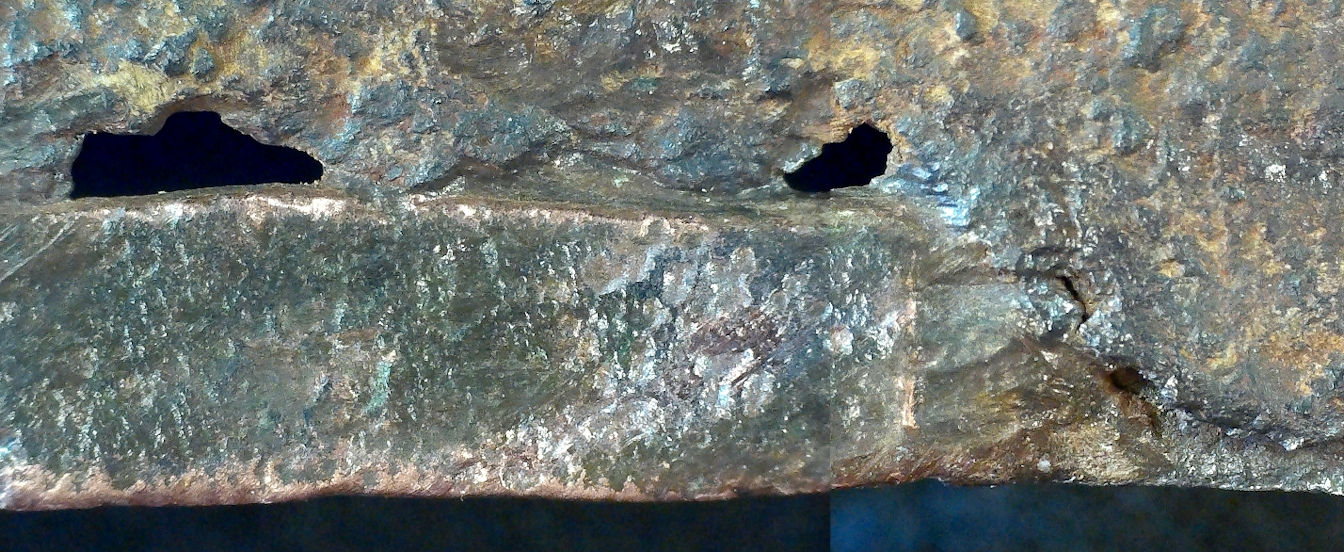
Here are a few large size pictures showing the edge repair of the Luristan type I sword | ||||||||||||
| |||||||||||||
| |||||||||||||
| |||||||||||||
| |||||||||||||
|
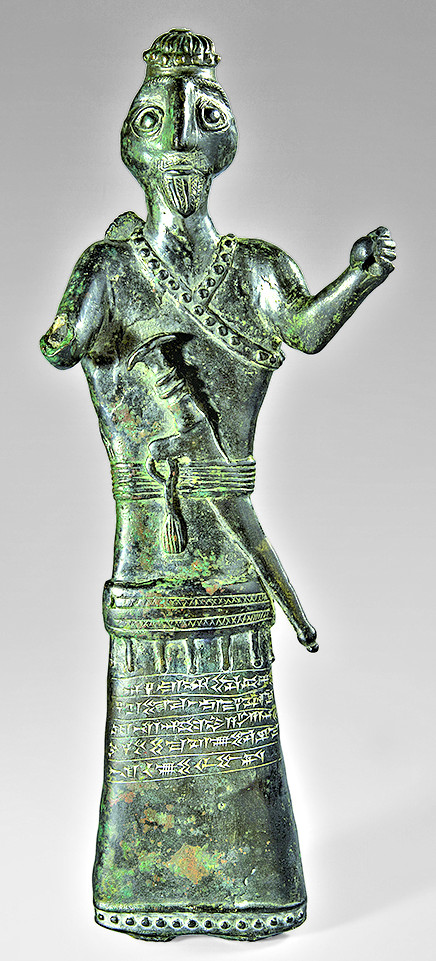
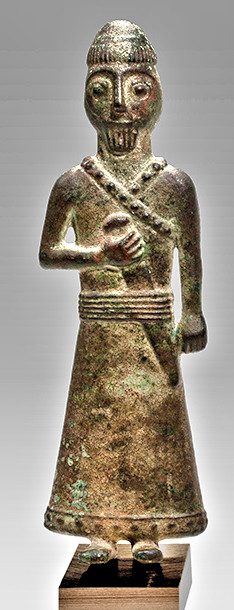
Here is another picture of the Luristoan bronze figure shown in the Teheran Museum plus a very similar figure I ran across recently | |||||||||||||
| ||||||||||||||
| 1) | Product Description Cast in bronze, probably in a mold, this statuette is virtually flat, almost like a relief. The back is slightly hollow, with no detail. It was therefore intended to be seen frontally: it was prob:ably a votive image, which faced the viewer and would have been placed in front of a wall or an altar. The warrior is standing upright, dressed in a long tunic crossed on the chest and held by a thick belt. With his right hand, the man holds the short and sharp dagger that is suspended from his belt. Despite its charm, this statuette is characterized by simple and essential shapes. The anatomical details expressing the senses are highlighted on the round face: the knob-like eyes, the prominent nose, the small horizontal mouth; only the ears are not represented. A semicircular headgear, with an edge striped vertically, would have indicated the social rank of the figure. The style and typology are closely related to the famous bronze examples of Luristan (modern-day western Iran). This work has an excellent parallel in a slightly larger statuette, barely more elaborate, which might represent a warrior-god. |
 First Iron Swords - First Iron Swords - Hallstatt Swords
First Iron Swords - Literature Digest
First Iron Swords - Luristan Type 1 Iron Swords
First Iron Swords - Reliefs / Sculptures with Swords and Daggers
First Iron Swords - Luristan Type 1 Iron Swords
First Iron Swords - Luristan Type 1 Iron Swords
© H. Föll (Iron, Steel and Swords script)
 With frame