Luristan Swords
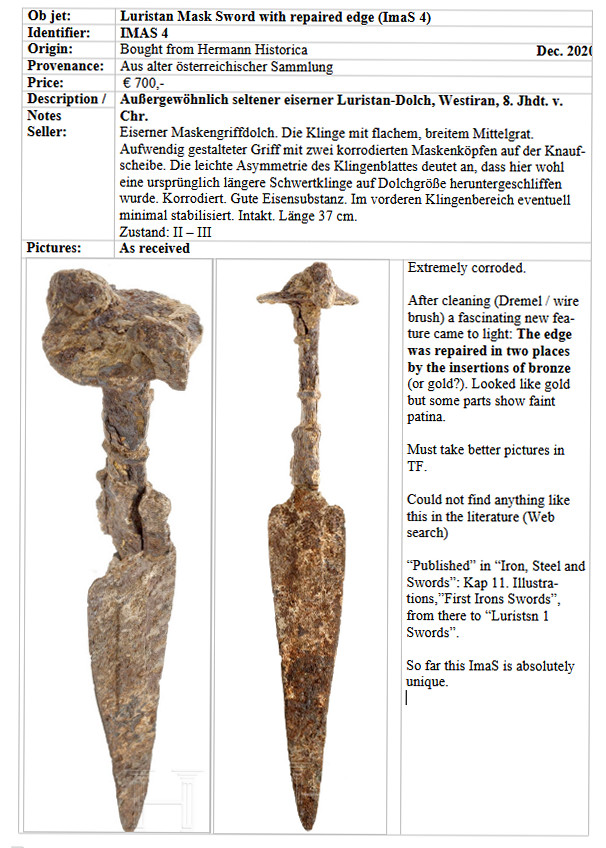
IMAS 4
 |
Luristan Swords |
||
IMAS 4 |
||
| Note: The “Lurtistn Sword” paged will be formatted somewhat differently (simpler) than the rest. As I grew older, my eyes deteriorated to a point where I can just barely type stuff in my html editor. I apologize for typos and perfectly spelled but wrong words produced by the erroe correction without me noticing. | ||
| Below are mny internla notes made after obtaining the sword | ||
| ||
| Details | ||||
| ||||
| ||||
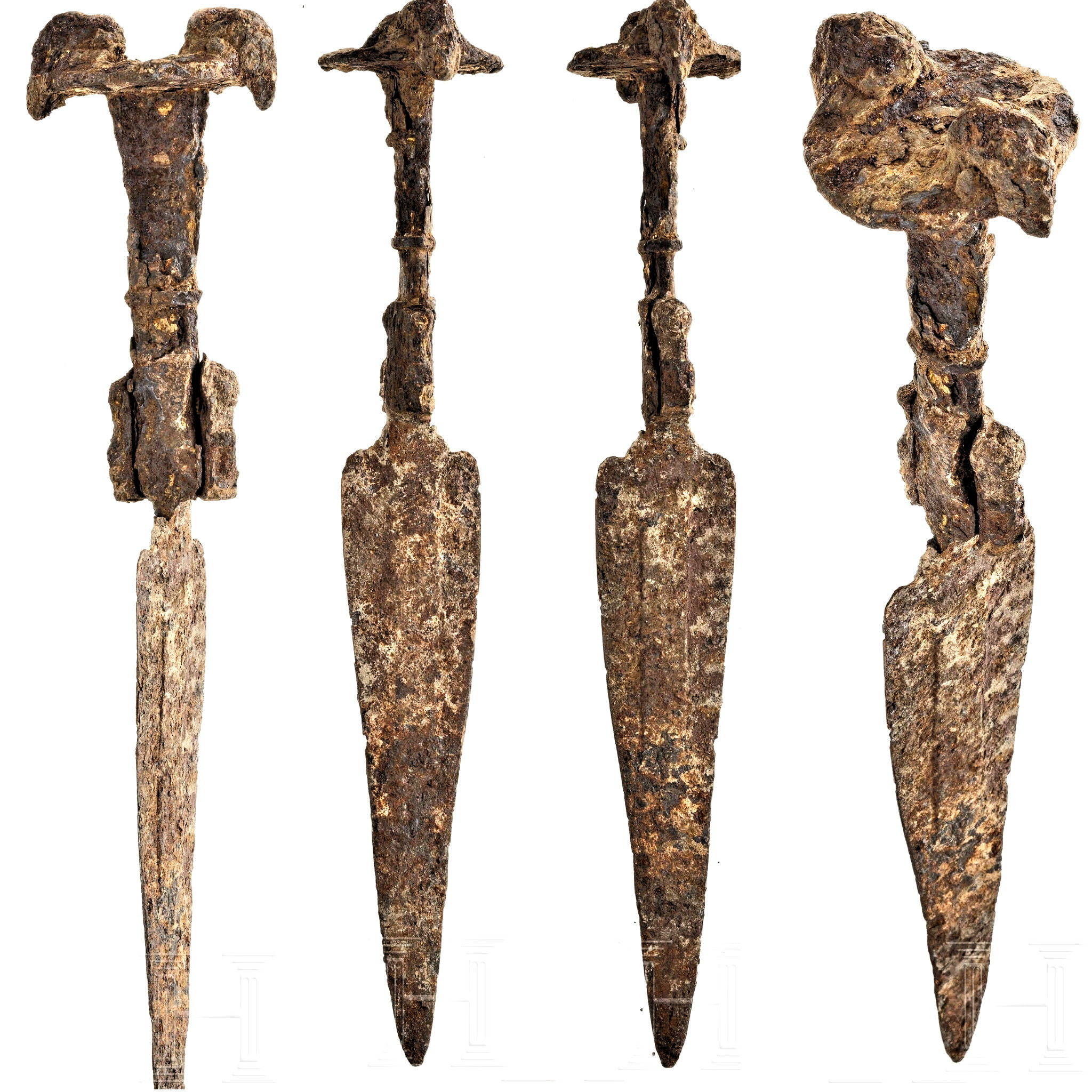
| The pictures from Hermann Historica | ||||
| ||||
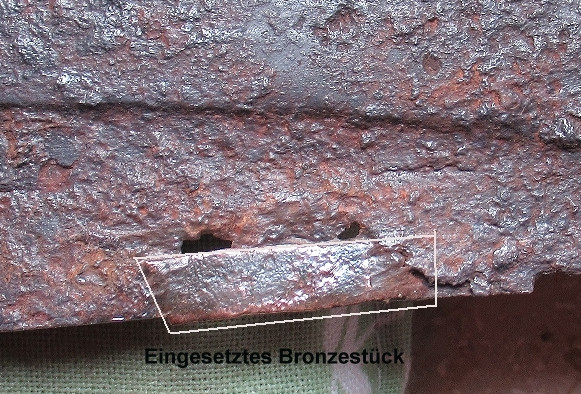
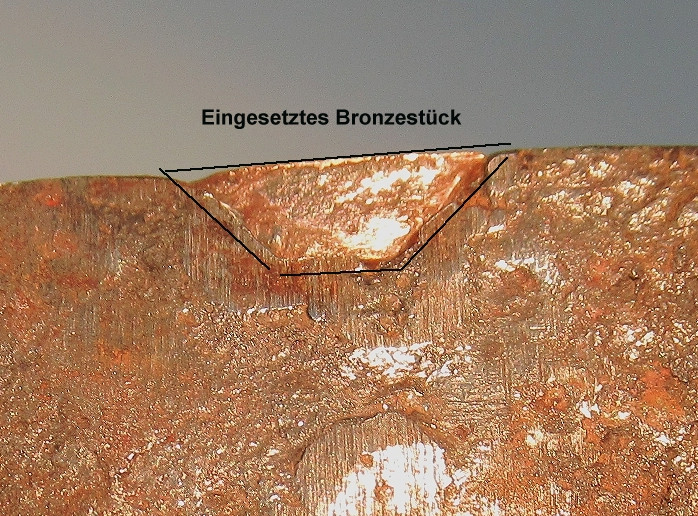
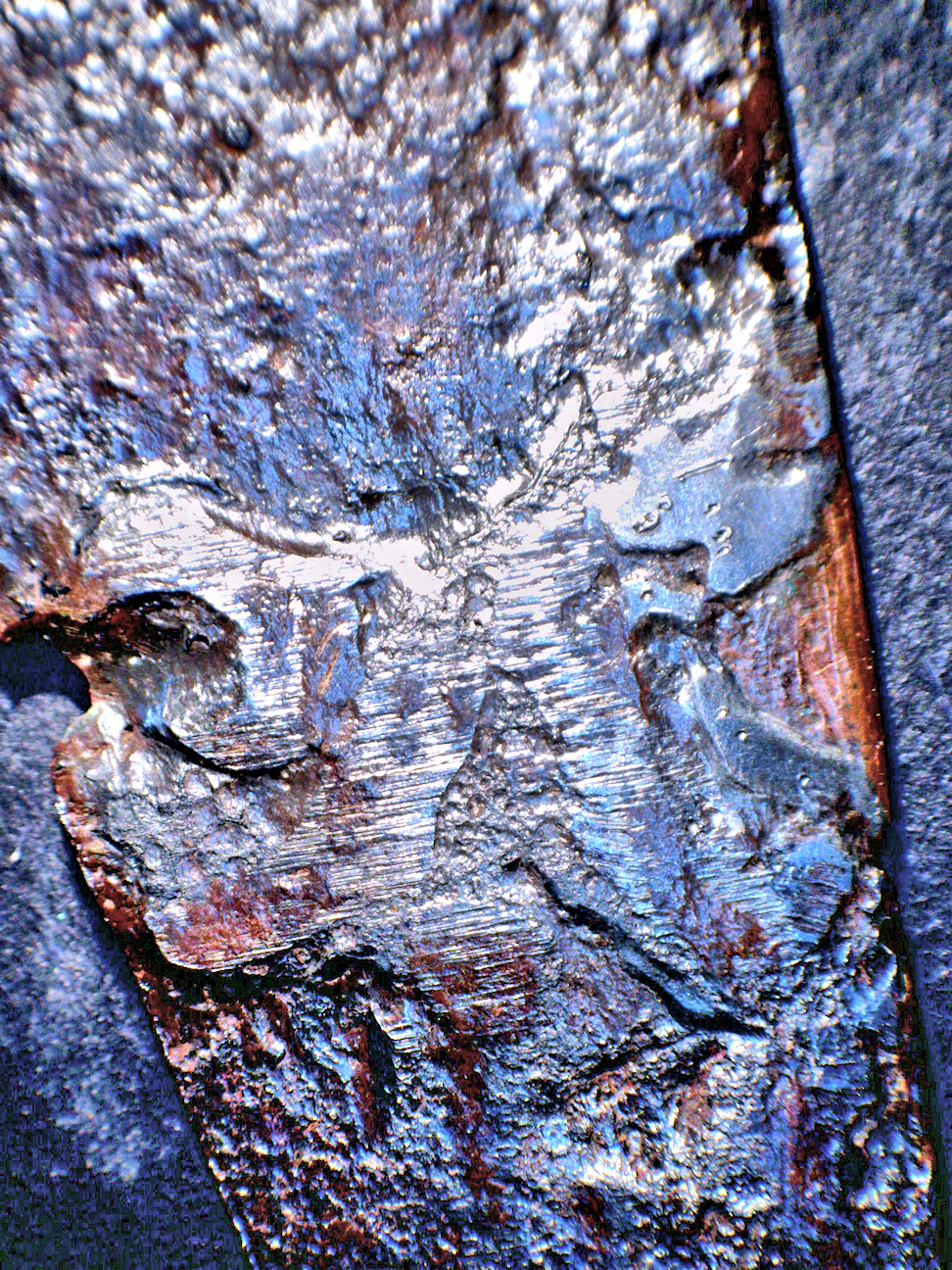
| How I noticed the repair: After cleaning a small part of the edge was shiny and golden.: | ||||
| ||||
| Here is the text from the ISS Hyperscript: | ||||
| In 2020 I had access to a somewhat unusual Luristan iron mask sword (called type 1 here).
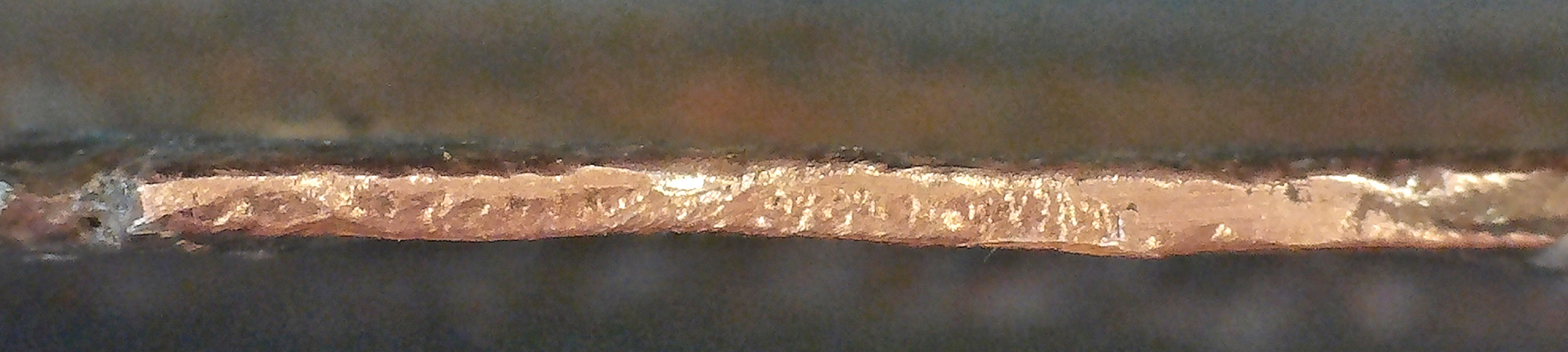
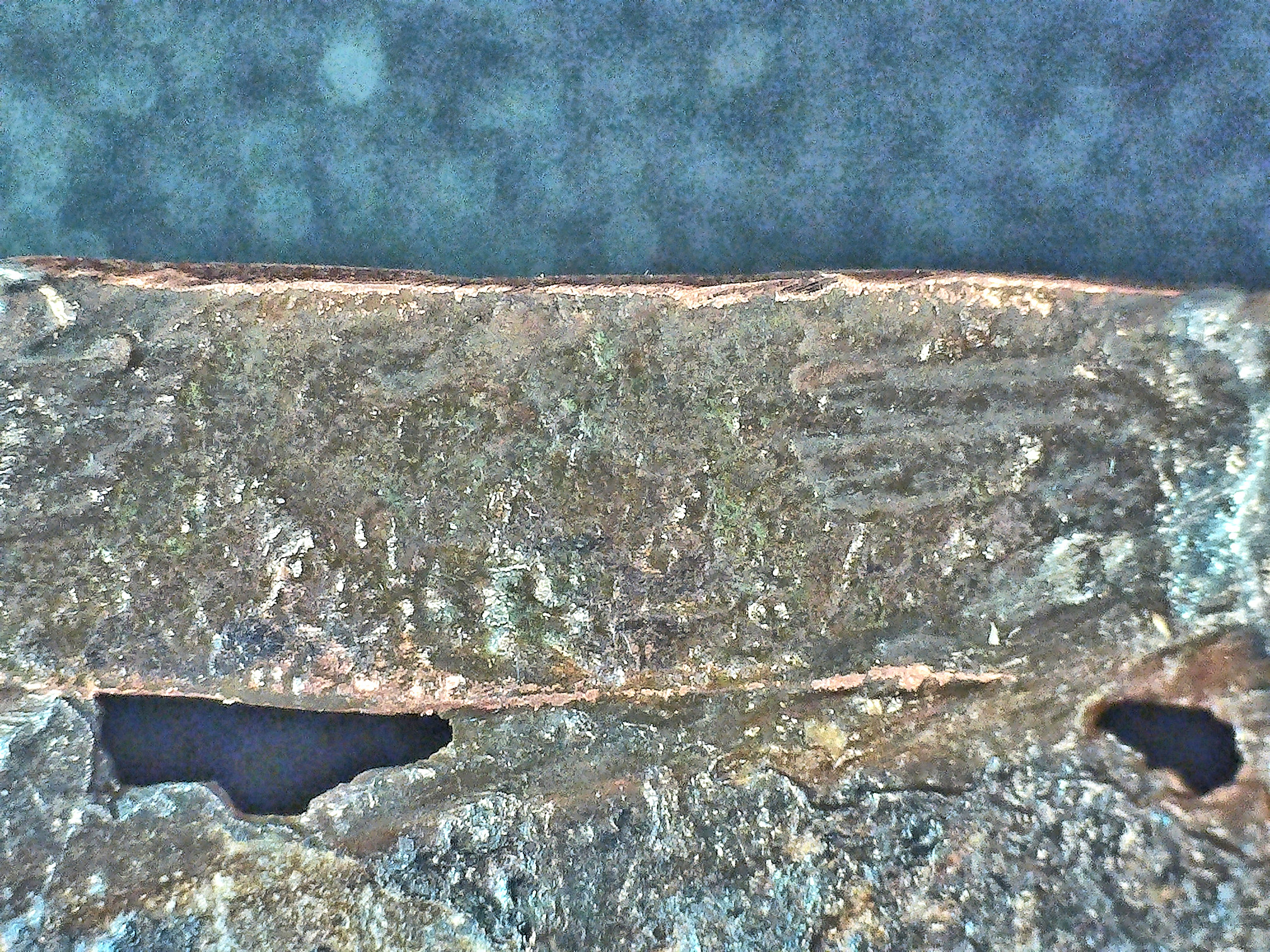
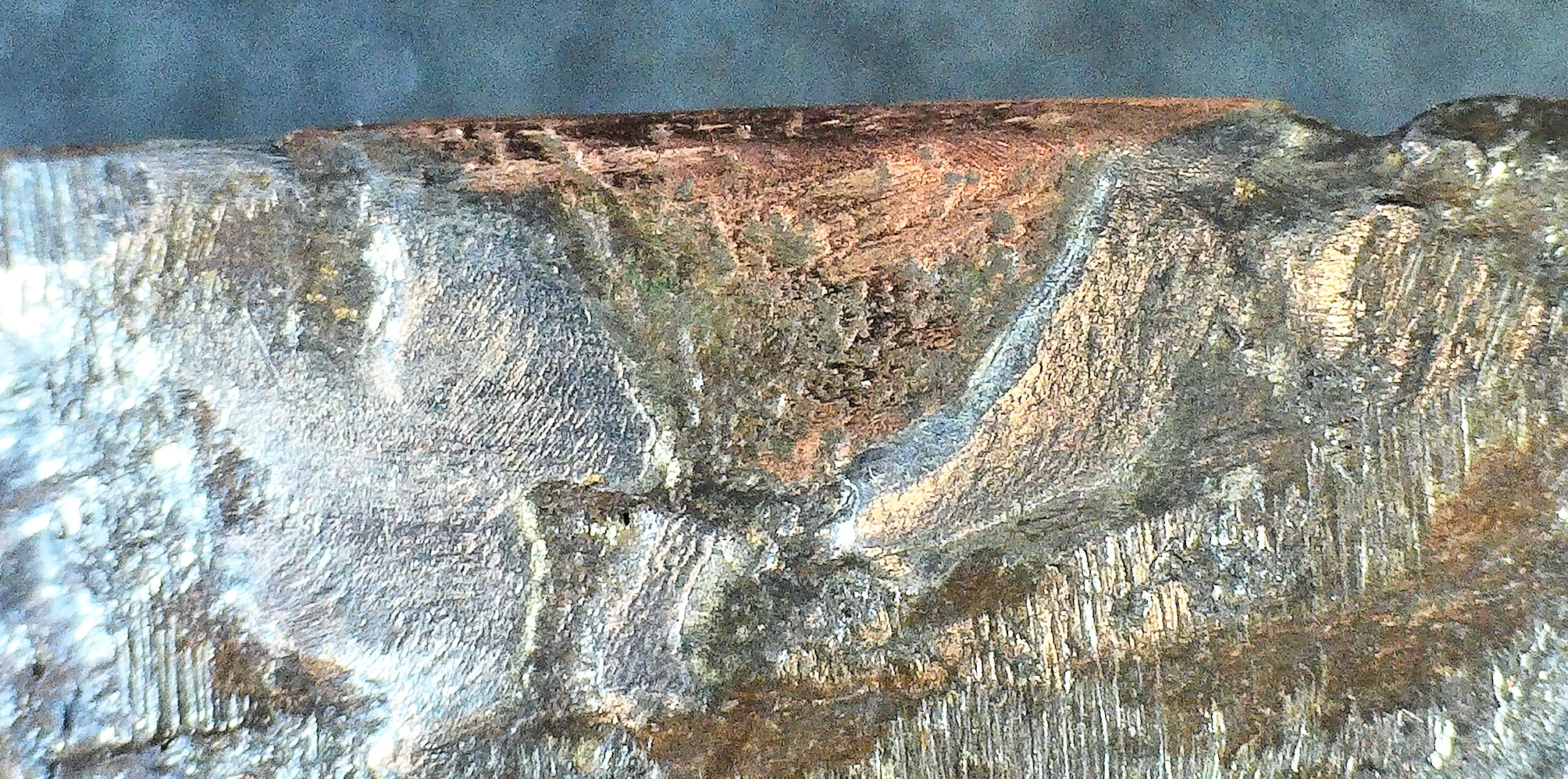
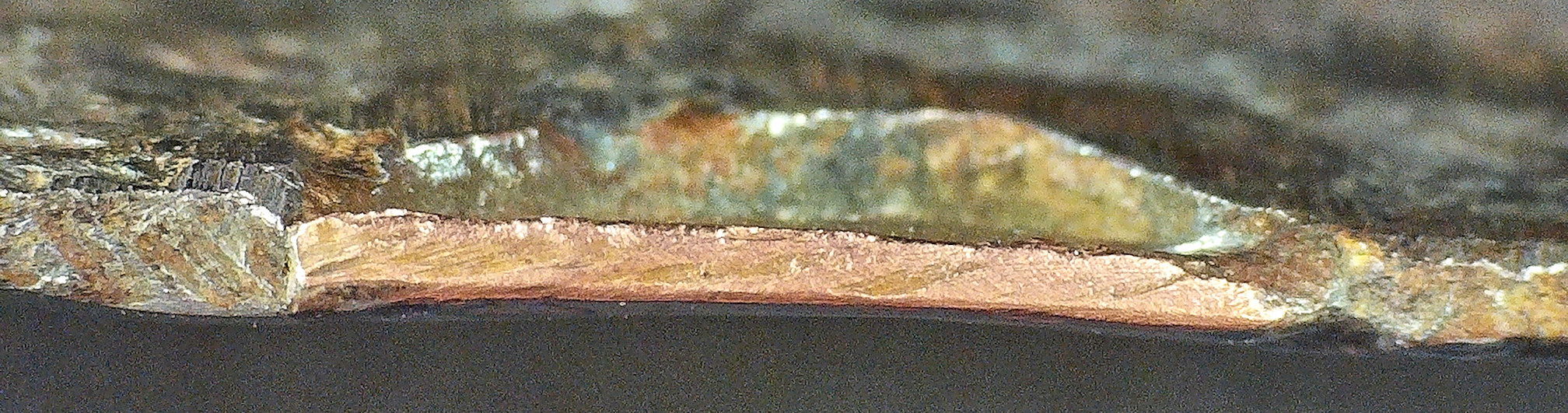
That's what it looks like: Heavily corroded and not very remarkable on a first glance. On a second glance, however, you note that the blade is triangular, not a common feature of Luristan type 1 swords.After some cleaning and looking more closely, you realize that two serious damages to the edge of the blade have been repaired by soldering (with pure tin?) a small piece of bronze into the gap. Here are pictures The silvery metal around the bronze pieces (identified by its typical color) is very soft (easily pierced with a needle) and thus must be tin It's a fake, of course. That's what every serious archaeologist would conclude. I'm not so sure, however. Here are my reasons: 1. The sword itself is definitely genuine and not a fake. The only fake then can be the repair, possibly done by a modern craftsman trying to make the old sword look better. 2. When I received the sword, it was covered with grime and rust;: see the topmost picture. The repairs were not visible and neither were the two big holes in the blade, see below and the small holes next to one bronze insert (whit arrows). All holes and the bronze inlays only became obvious after cleaning 3. While it is possible that the forger artificially corroded and dirtied the sword after making the repair, it makes no sense whatsoever. Why didn't he fill up the holes too? And why making the appearance much worse by corrosion if his goal was to make the sword look better? 4. Now to the killer argument: If the two holes behind the bronze inlay were there originally, the then incomplete repair makes no sense at all. If they were produced by artificial corrosion after the repair, the whole process makes no sense at all once more | ||||
| So let's assume that the repair was done when the sword was in use. The holes visible now
are due to corrosion taking place for almost 3000 years. The questions now is: Would the old Luri smiths have been capable of doing a repair like this? My answer is: yes! They certainly had noticed that tin has a low melting point and that you could melt it just by touching it with a medium hot copper rod. Moreover, the molten tin will wet the copper and coat the surface - provided the copper (or bronze) was clean. The hard part is to get liquid tin to wet iron. That needs a flux of some kind. While not any fatty substance (like bees wax) will work, some might. We just don't know those secrets anymore because we buy some working flux somewhere without having the faintest idea of what it contains.Wikipedia claims that olive oil and Ammonium chloride would work for soldering iron. Ammonium chloride, if you wonder, can be made from urine. If the old Luristanis had ammonium chloride is doubtful but they may have had similar substances and who knows what else might work Why did the use a piece of bronze and not a piece of iron to fill the holes? Who knows, My guess is that it is just much easier to work with. It it was completely covered with tin, it looks like like iron and you hardly could see the repaired part of the blade. | ||||
| My conclusion is The Luristan smiths could do complex repairsThe sword shown here is the only known example of this antique technique There are probably more examples of repaired blades or other parts of formerly expensive swords. It's just that nobody noticed so far. First, it might be hard to see below the corrosion layers, and second, if the repair was good, it is hardly visible. | ||||
| More pictures: | ||||||
| ||||||
| ||||||
| ||||||
| Some More Details At the lower bronc inset, the blade has a peculiar structure. It looks like a layer of the soldering tin but the material is hard; no little pits (like in the tin on the left) can be produced by prodding it with a needle. Similar structures can be seen where the blade meets the hilt. It looks like the smith welded on small patches of iron. IMAS 3 shoes similar structures. There were two rings / bands around the hilt. One, however, is missing and it is not clear if they were simple rings or of the crimped version. The animals are coming loose but we see remains of a crimping plate. T here are no decorations on the underside of the pommel plate. The heads and animals are heavily corroded and do not show any special features. The blade is somewhat atypical with its pronounced triangular shape. It does show the typical mi-rip, however. The blade might have been sharp at some time. The corrosion pattern is severe but shows no sign of special structures like layers. |
| |||||
 First Iron Swords - Luristan Type 1 Iron Swords
© H. Föll (Iron, Steel and Swords script)
 With frame