Luristan Swords
IMAS 10
 |
 |
Luristan Swords |
||
IMAS 10 |
||
| Note: The “Lurtistn Sword” paged will be formatted somewhat differently (simpler) than the rest. As I grew older, my eyes deteriorated to a point where I can just barely type stuff in my html editor. I apologize for typos and perfectly spelled but wrong words produced by the erroe correction without me noticing. | ||
| Transferred to Royal Museums of Art and History in Brussels | ||
| High resolution pictures in this link | ||
| ||
| ||
| Details | ||||||
| Darta from the "Project" | ||||||
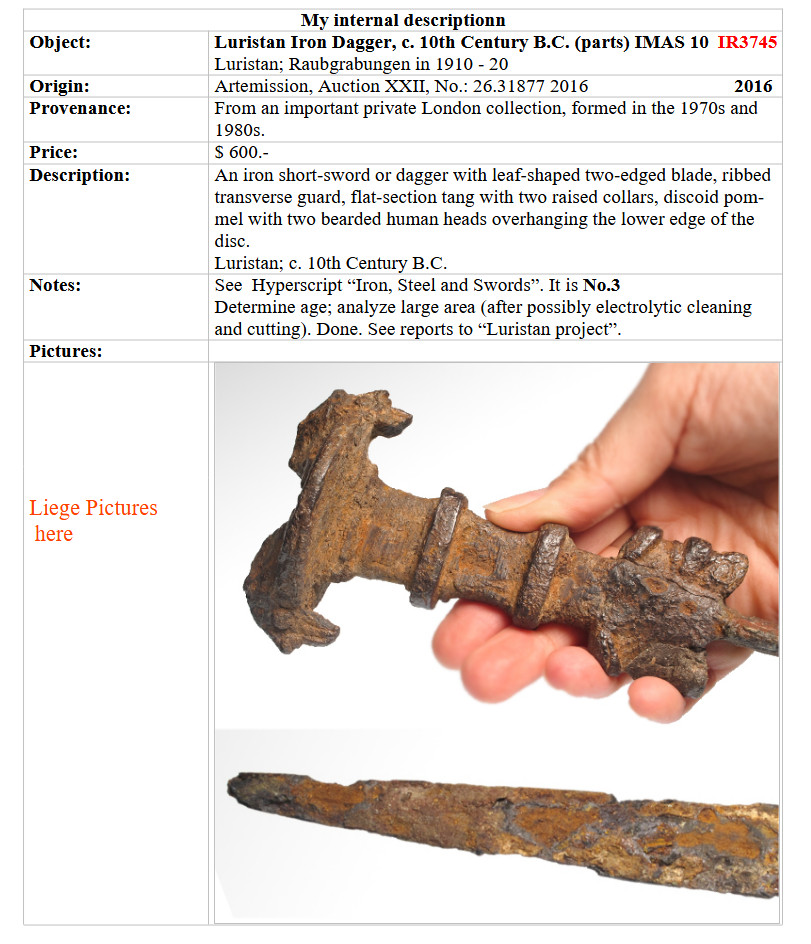
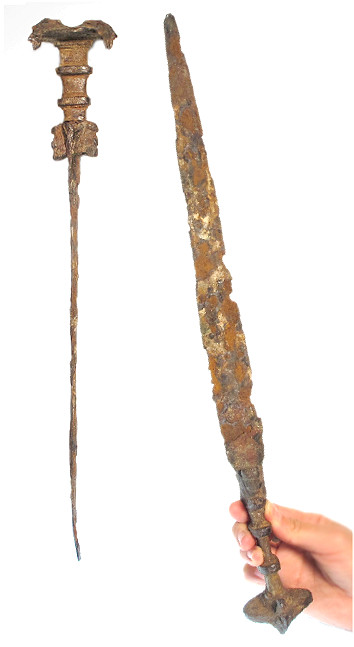
| 3. Schwert IR 3745 (=IMAS 10) Seee Projcet, A Abschlussbericht 3.1 Übersicht | ||||||
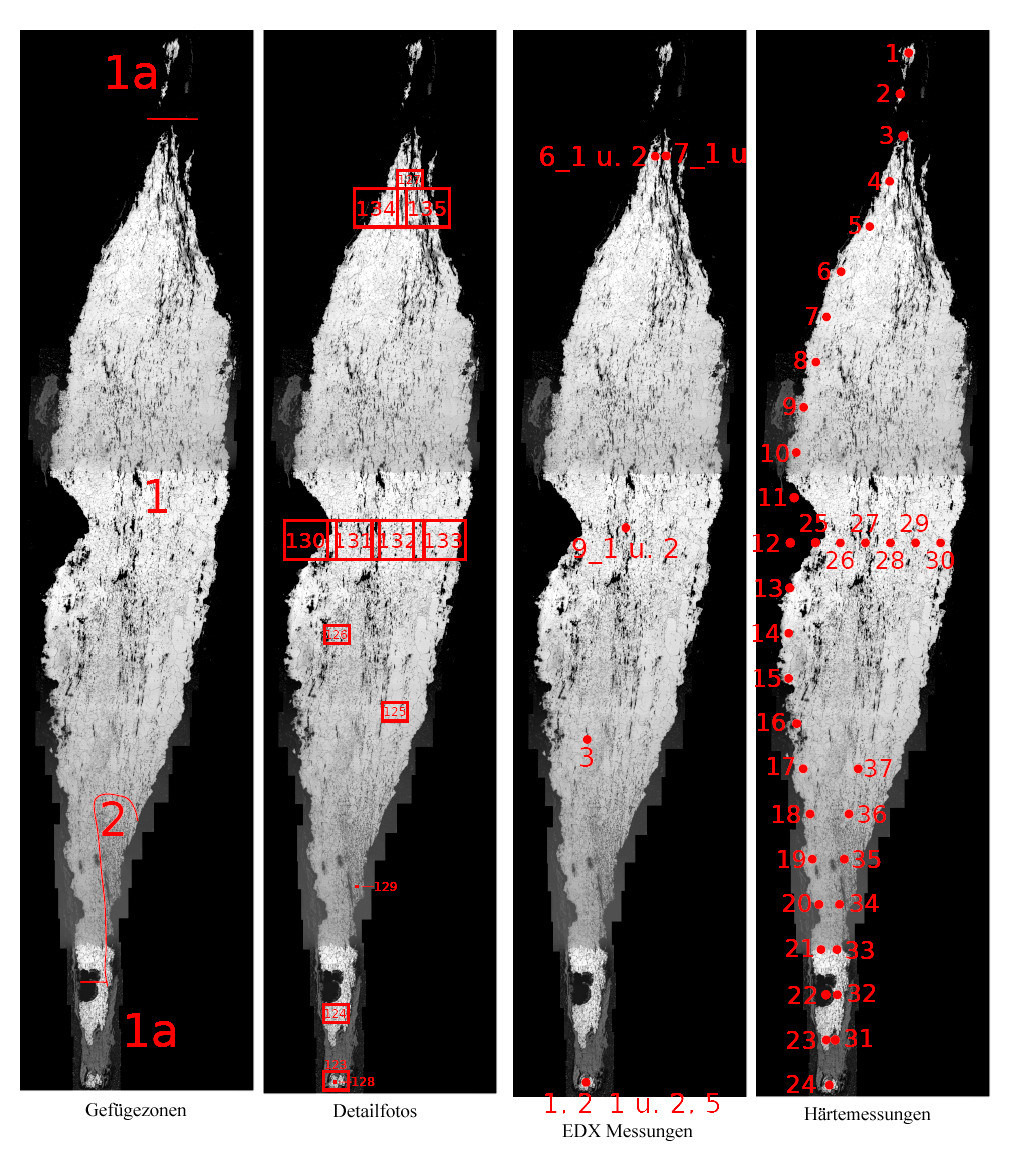
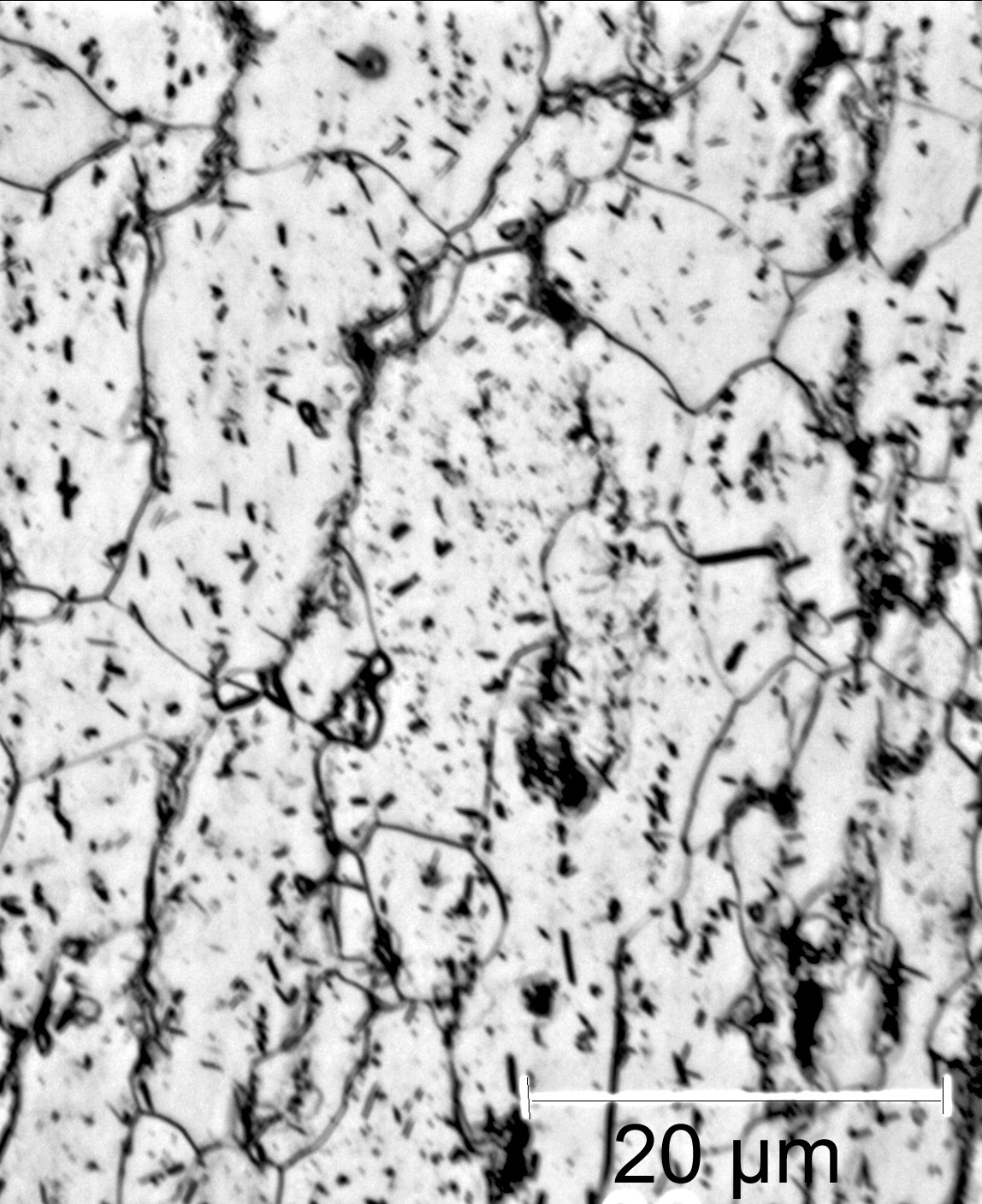
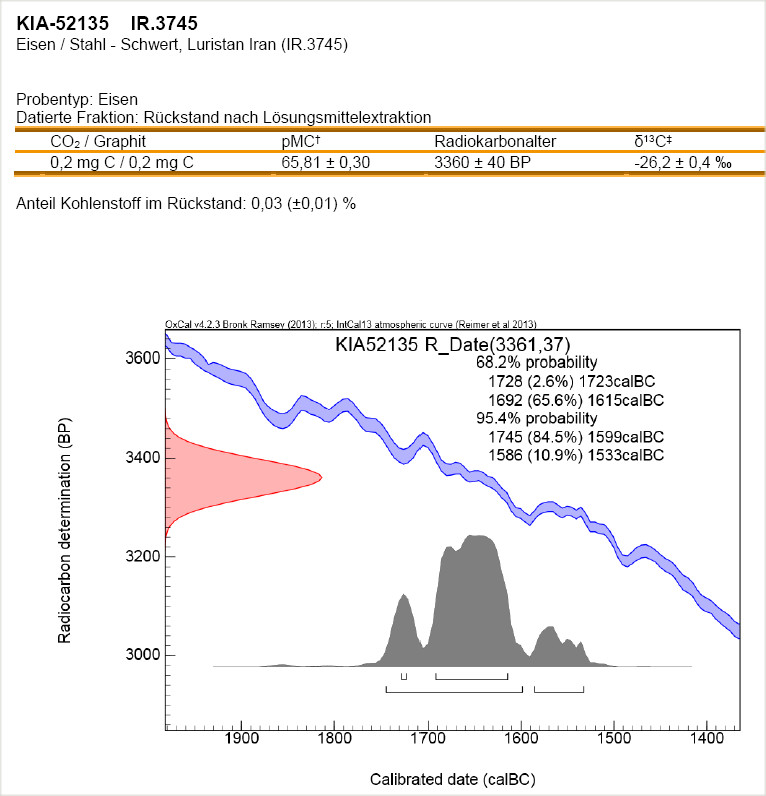
| IR3745 Bezeichnung Antrag: Luri 3 Altersbestimmung: C-Konzentration C14 Probe: 0.01 %; für Altersbestimmung grenzwertig. C14 Alter: 1745 – 1533 calBCE Metallographie: Poliert, Nital und Oberhoffer geätzt Ca. 260 Bilder im Lichtmikroskop 3 Bilder im REM, 12 EDX Analysen. Typisches Rennofeneisen, inhomogene Struktur mit Zonen verschiedener Mikrostruktur; globulare und ungewöhnliche Zementitstrukturen. Keine Härtung; erhebliche Verformung durch Schmieden. Erhebliche Schlackeneinschlüsse. Merklicher Ca Gehalt bei niedrigem K-Gehalt (Verhüttung mit Kalk?). Härte zwischen 100 und 185 mHV | |||||
| 3.2 Illustrationsbilder zur Metallographie | ||||
| ||||
| ||||
| ||||
| 3.3 Daten zur Altersanalyse | ||||
| ||||
| IMAS 10 was one of the three swords that we for a C14 age analysis. The link tells you how
that works. A small piece was cut off, its structure determined by metallurgy, and then used for the C14 analysis. The age found (see above) was 1745 – 1533 BCE However! |
||||
| The iron ore or in the materials used for the smelter might contain carbonates; i.e. the CaCO3
of limestone or iron ore in the form of iron carbonate, FeCO3. The carbon in these minerals is extremely old and if some
of it gets into the smelted iron, the mix of mineral carbon and charcoal carbon would always give an age large than that
of the charcoal carbon. The results thus must be seen as only giving a limit to the age of the sword, It always could be younger than the number found, but never older. | ||||
| For some swords used in the “Luristan project”, large scale pictures have been made
which I will show here top preserve them for eternity. They are shown only ¼ of their original size. You can restore
the original size by copying the picture and inserting it into some image processor. These pictures show an unusual feature: | ||||
| ||||
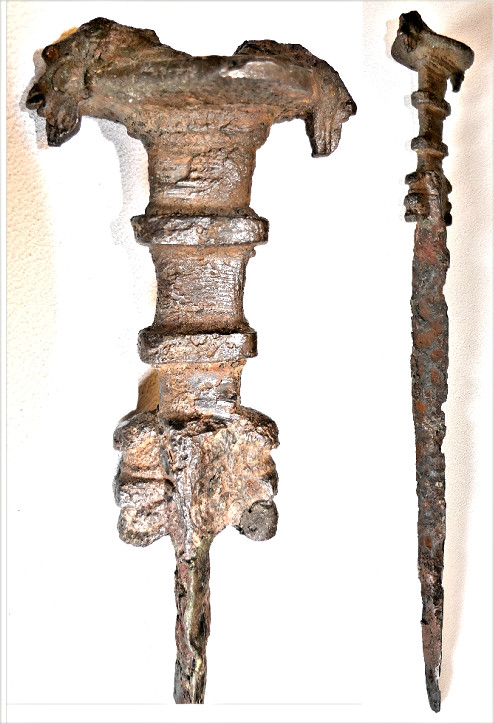
| The “grip” of the hilt shows some texture (banding) that I have never seen with
other INAS. Our original thoughts: The hilt most probably contains the largest amounts of preserved iron. But as it also shows remnants of an organic grip binding preserved in corrosion products, it should not be sampled. The blade is heavily corroded, the samples for AMS dating have to be taken out of its the centre because only here larger amounts of preserved iron are to be expected. So it is planed to cut out three whole cross sections, one for dating in Kiel, one for dating in Finland and one for metallography. | ||||
 First Iron Swords - Luristan Type 1 Iron Swords
© H. Föll (Iron, Steel and Swords script)


 With frame