| Details |
| A Key to Crimping |
|
One animal is missing; fell out of its crimp
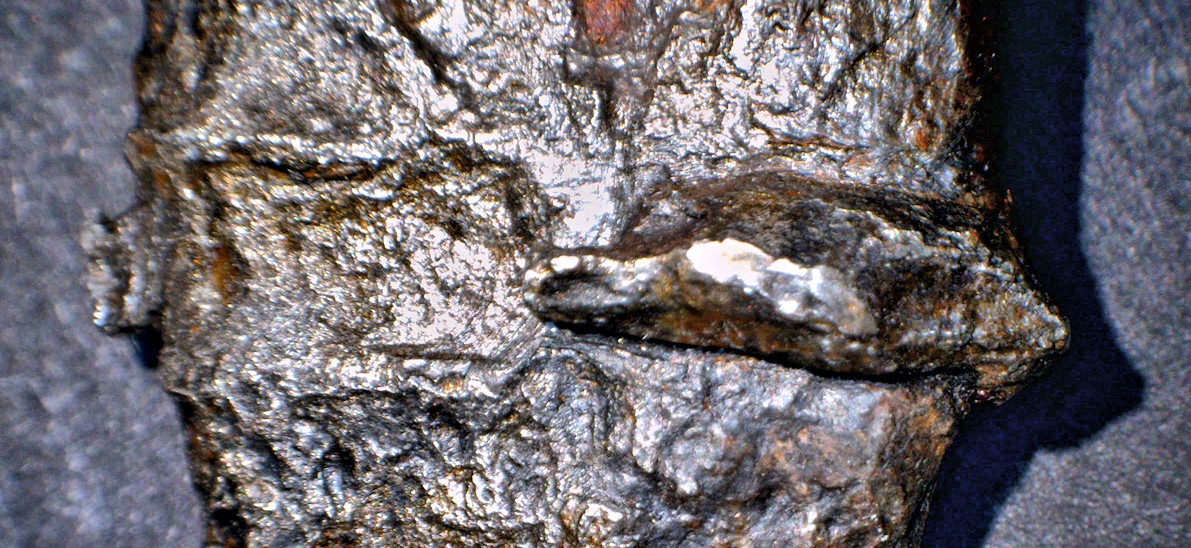
plate. This gives us a clear look at the crimping plate still left on the bulk of the hilt. If you look closely,
you see a thin black line running around in the interior; a magnified view is below.
That might give an idea how the
assembly was mad.
First, the smith makes what I like to call a crimping ring.
The sketch below gives an idea of what I mean. The underside of the ring is then fire-welded to the bulk and the “black
lines” in the picture denote the inside of the crimping ring. |
|
|
| |
| |
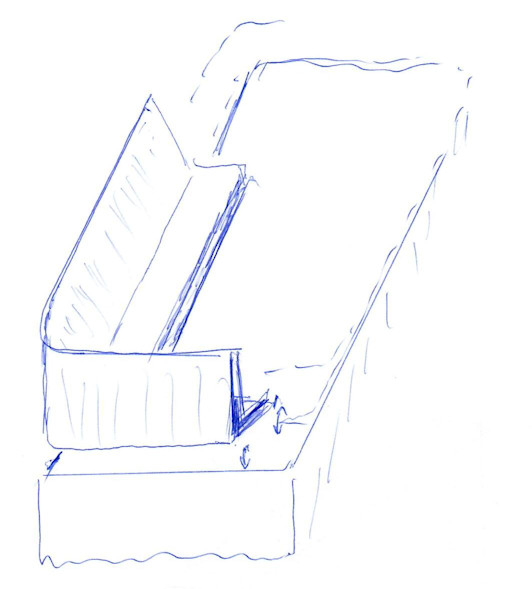 |
| Schemartic drawing of the crimping ring |
| |
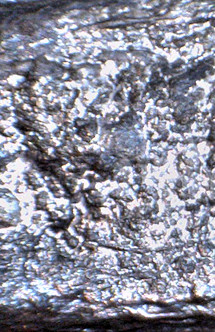 |
Enlargement of above. The faint black line
denotes the edge of the crimping ring |
|
| |
| |
Next you put the anal (or head) inside the ring, do the crimping, and then
fier-weld the crimps to the inset. Next you do some smoothing and some carving (e.g. the animal legs). Far more to that
in IMAS 1. The animal sits on the bottom of the crimp ring and that’s why we often find that there is free space below
the animals in X-rays or cuttings.
Rather tricky but if you think about it, the only way. Chiseling out the crimps
from a solid bulk and then inserting the animal would be far more difficult if not impossible., The heads show some signs
of attachment via a crimp plate, too. |
| |
© H. Föll (Iron, Steel and Swords script)
 First Iron Swords - Luristan Type 1 Iron Swords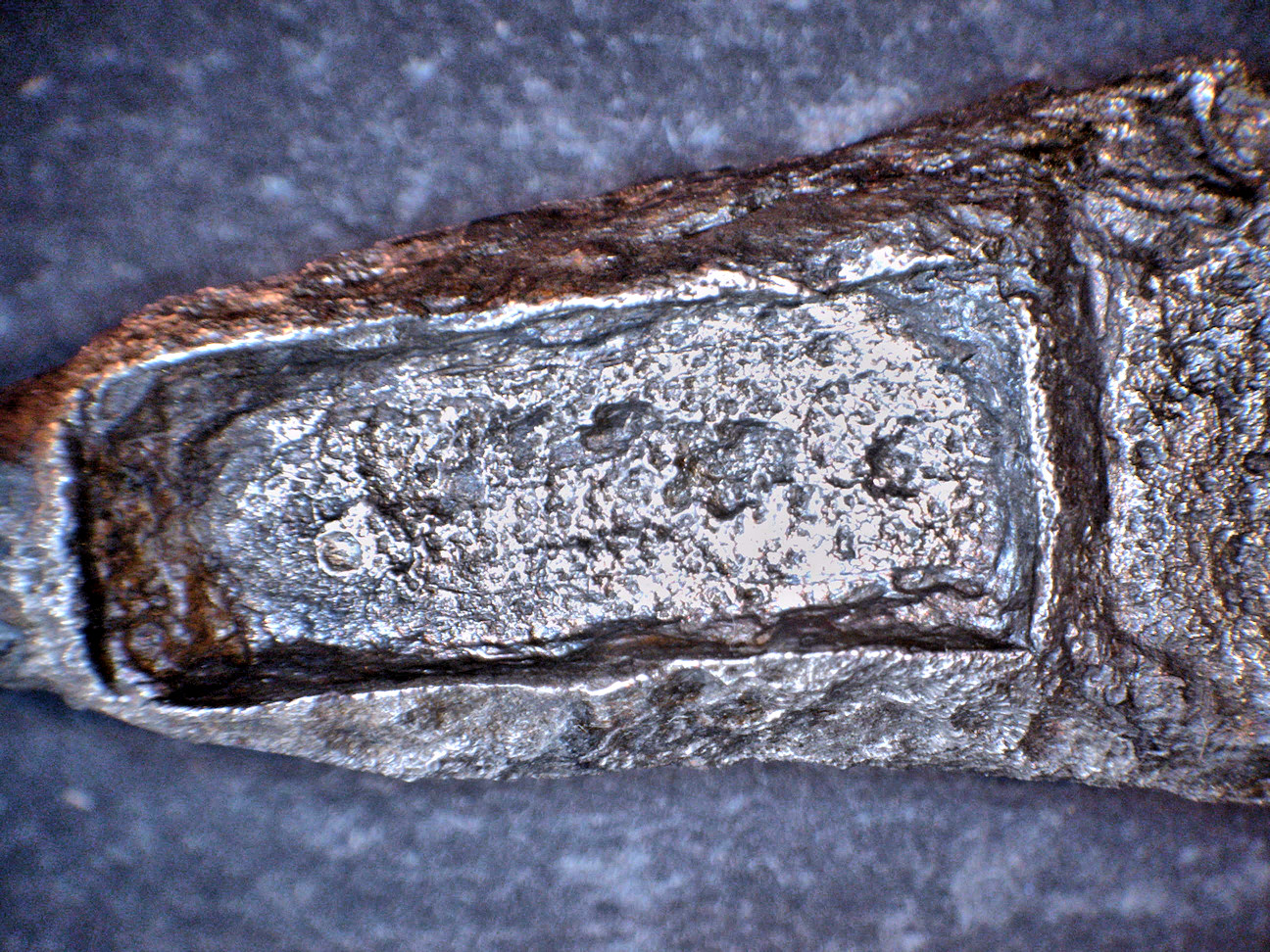
 With frame